com.poscoict.glueframework.biz.activity
Class GlueJdbcInsert
java.lang.Object
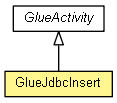
 com.poscoict.glueframework.biz.activity.GlueActivity<GlueContext>
com.poscoict.glueframework.biz.activity.GlueJdbcInsert
com.poscoict.glueframework.biz.activity.GlueActivity<GlueContext>
com.poscoict.glueframework.biz.activity.GlueJdbcInsert
public class GlueJdbcInsert
- extends GlueActivity<GlueContext>
Insert Activity. GlueJdbcInsert Class는 "insert into emp(empno, ename, deptno) values(?, ?, ?)" 와 같은 SQL insert into statement를 수행 하는
Activity 이다. Web화면과 NonUI 공통으로 사용되고 Binding Parameter Type은 Web인 경우 String []의 {0}번째로 Binding 하고 Web이 아닌 경우는 해당 Object를 Binding 한다. 여기서
chk-name이 있는 경우 Web의 CheckBox에 Check 된 수만큼 반복 하고 없는 경우는 Context에서 바로 String[] 로 get하여 Binding 한다. NonUI의 경우 Data Type이 String[]가 아닌 경우 바로
해당 Object로 Binding 한다.
 사용 예
 - case 1 :
 <activity name="Insert" class="com.poscoict.glueframework.biz.activity.GlueJdbcInsert">
     <property name="dao" value="testdao" />
     <property name="sql-key" value="emp.insert" />
     <property name="param-count" value="4" />
     <property name="param0" value="EMPNO" />
     <property name="param1" value="ENAME" />
     <property name="param2" value="SAL" />
     <property name="param3" value="DEPTNO" />
     <property name="result-key" value="insertCnt" />
     <transition name="success" value="Find" />
 </activity>
 ==>
      binding(web) :
              List args = new ArrayList();
              args.add(((String[])ctx.get("EMPNO"))[0]);
              args.add(((String[])ctx.get("ENAME"))[0]);
              args.add(((String[])ctx.get("SAL"))[0]);
              args.add(((String[])ctx.get("DEPTNO"))[0]);
              GlueParameter<List> param = new GlueParameter<List>(args);
           (NonUI) :
              List args = new ArrayList();
              args.add(ctx.get("EMPNO"));
              args.add(ctx.get("ENAME"));
              args.add(ctx.get("SAL"));
              args.add(ctx.get("DEPTNO"));
              GlueParameter<List> param = new GlueParameter<List>(args);


 - case 2 : Looping 처리. (Web)
 <activity name="Insert" class="com.poscoict.glueframework.biz.activity.GlueJdbcInsert">
     <property name="dao" value="testdao" />
     <property name="sql-key" value="emp.insert" />
     <property name="param-count" value="4" />
     <property name="param0" value="EMPNO" />
     <property name="param1" value="ENAME" />
     <property name="param2" value="SAL" />
     <property name="param3" value="DEPTNO" />
     <property name="result-key" value="insertCnt" />
     <property name="chk-name" value="chk" />
     <transition name="success" value="Find" />
 </activity>
 ==>
      binding : String[] checked = ctx.get("chk");
              List args = new ArrayList();
              for(int i=0, iz=checked.length; i<iz; i++){
                  args.add(((String[])ctx.get("EMPNO"))[Integer.parseInt(checked[i])]);
                  args.add(((String[])ctx.get("ENAME"))[Integer.parseInt(checked[i])]);
                  args.add(((String[])ctx.get("SAL"))[Integer.parseInt(checked[i])]);
                  args.add(((String[])ctx.get("DEPTNO"))[Integer.parseInt(checked[i])]);
              }
              GlueParameter<List> param = new GlueParameter<List>(args);


 - case 3 : Looping 처리. (NonUI)
 <activity name="Insert" class="com.poscoict.glueframework.biz.activity.GlueJdbcInsert">
     <property name="dao" value="testdao" />
     <property name="sql-key" value="emp.insert" />
     <property name="param-count" value="4" />
     <property name="param0" value="EMPNO" />
     <property name="param1" value="ENAME" />
     <property name="param2" value="SAL" />
     <property name="param3" value="DEPTNO" />
     <property name="result-key" value="insertCnt" />
     <property name="list-key" value="dataList" />
     <transition name="success" value="Find" />
 </activity>
 ==>
      binding : list = (ArrayList)ctx.get("dataList");
              for(int i=0, iz=list.size(); i<iz; i++){
                  List args = new ArrayList();
                  args.add(((Map)list.get(i)).get("EMPNO"));
                  args.add(((Map)list.get(i)).get("ENAME"));
                  args.add(((Map)list.get(i)).get("SAL"));
                  args.add(((Map)list.get(i)).get("DEPTNO"));
                  GlueParameter<List> param = new GlueParameter<List>(args);
                  ..
              }


 - case 4 :
 <activity name="Insert" class="com.poscoict.glueframework.biz.activity.GlueJdbcInsert">
     <property name="dao" value="testdao" />
     <property name="sql-key" value="emp.insert.named" />
     <property name="param-bindings" value="empno=EMPNO|ename=ENAME|sal=SAL|deptno=DEPTNO" />
     <property name="result-key" value="insertCnt" />
     <transition name="success" value="Find" />
 </activity>
 ==>
      binding(web) :
              Map args = new HashMap();
              args.put("empno", ((String[])ctx.get("EMPNO"))[0]);
              args.put("ename", ((String[])ctx.get("ENAME"))[0]);
              args.put("sal", ((String[])ctx.get("SAL"))[0]);
              args.put("deptno", ((String[])ctx.get("DEPTNO"))[0]);
              GlueParameter<Map> param = new GlueParameter<Map>(args);
           (NonUI) :
              Map args = new HashMap();
              args.put("empno", ctx.get("EMPNO"));
              args.put("ename", ctx.get("ENAME"));
              args.put("sal", ctx.get("SAL"));
              args.put("deptno", ctx.get("DEPTNO"));
              GlueParameter<Map> param = new GlueParameter<Map>(args);


 - case 5 : Looping 처리. (Web)
 <activity name="Insert" class="com.poscoict.glueframework.biz.activity.GlueJdbcInsert">
     <property name="dao" value="testdao" />
     <property name="sql-key" value="emp.insert.named" />
     <property name="param-bindings" value="empno=EMPNO|ename=ENAME|sal=SAL|deptno=DEPTNO" />
     <property name="result-key" value="insertCnt" />
     <property name="chk-name" value="chk" />
     <transition name="success" value="Find" />
 </activity>
 ==>
      binding : String[] checked = ctx.get("chk");
              for(int i=0, iz=checked.length; i<iz; i++){
                  Map args = new HashMap();
                  args.put("empno", ((String[])ctx.get("EMPNO"))[Integer.parseInt(checked[i])]);
                  args.put("ename", ((String[])ctx.get("ENAME"))[Integer.parseInt(checked[i])]);
                  args.put("sal", ((String[])ctx.get("SAL"))[Integer.parseInt(checked[i])]);
                  args.put("deptno", ((String[])ctx.get("DEPTNO"))[Integer.parseInt(checked[i])]);
                  GlueParameter<Map> param = new GlueParameter<Map>(args);
                  ..
              }


 - case 6 : Looping 처리. (NonUI)
 <activity name="Insert" class="com.poscoict.glueframework.biz.activity.GlueJdbcInsert">
     <property name="dao" value="testdao" />
     <property name="sql-key" value="emp.insert.named" />
     <property name="param-bindings" value="empno=EMPNO|ename=ENAME|sal=SAL|deptno=DEPTNO" />
     <property name="result-key" value="insertCnt" />
     <property name="list-key" value="dataList" />
     <transition name="success" value="Find" />
 </activity>
 ==>
      binding : List list = (ArrayList)ctx.get("dataList");
              for(int i=0, iz=checked.length; i<iz; i++){
                  Map args = new HashMap();
                  args.put("empno", ((Map)list.get(i)).get("EMPNO"));
                  args.put("ename", ((Map)list.get(i)).get("ENAME"));
                  args.put("sal", ((Map)list.get(i)).get("ENAME"));
                  args.put("deptno", ((Map)list.get(i)).get("DEPTNO"));
                  GlueParameter<Map> param = new GlueParameter<Map>(args);
                  ..
              }


 Property 설정
 - dao : (필수) applicationContext.xml의 DAO id.

 - sql-key : (필수) xxx-query.glue_sql의 query id

 - param-count : (선택) Binding 할 개수 ( insert into emp(empno,ename,deptno) values (?,?,?) )의 "?" 수

 - param#(param0,param1...) : (선택) Binding Value ("?"와 순서 일치 하여야 함)

 - param-bindings : (선택) binding에 사용되는 값과 Mapping 되는 Key( bindName=ctxName[|bindName=ctxName] ).
         ctx의 key가 binding variable name과 같은 경우 생략(대소문자 구분).
         ctxName 은 Context의 Key이며, <property name="list-key" value="dataList" />가 있다면 "dataList" 의 map의 Key.

 - chk-name : (선택) 화면의 CheckBox ID(HttpRequest의 parameter name).
         <property name="chk-name" value="chk" /> 와 같이 "chk" 가 선언 되어 있다면,
         <input type="checkbox" name="chk">의 value 값에 따라 Looping 처리를 한다.
         chk의 value는 0,1,2...,n 으로 부여되며 checked 된 값만 Context에 담긴다.

 - list-key : (선택) SQL 문에 Binding 할 Data Context Key.
         <property name="list-key" value="dataList" /> 와 같이 "dataList" 가 선언 되어 있다면,
         이전 Activity에서 List(Map<name, value>) 구조의 Data를 생성해서 Context에 담는다.
         [ sample java code ]
             List dataList = new ArrayList();
             Map data1 = new HashMap();
             data1.put("EMPNO","1111");
             data1.put("ENAME","SCOTT");
             data1.put("DEPTNO","10");
             dataList.add(data1);
             Map data2 = new HashMap();
             data2.put("EMPNO","2222");
             data2.put("ENAME","JANE");
             data2.put("DEPTNO","10");
             dataList.add(data2);
             ctx.put("dataList",dataList);

 - result-key : (선택) Context에 담기는 Query 수행 결과(등록 record 수) Key.
         [ default ] : <sql-key>_insertCnt

 - is-audit : insert시 Audit 항목 적용 Option
          Audit 항목은 glue.properties에 audit.insert.key 와 audit.update.key 를 참고한다.
          주의사항: Audit 항목은 SQL에 반영되어 있어야 한다.
                GlueParameter<List>를 사용해야하는 SQL인 경우,
                Column의 순서는 glue.properties에 정의한 순서와 같아야 하며,
                Audit 항목을 위 SQL처럼 맨 앞에 기술되어야 한다.


 glue.properties
 audit.insert.key=id,ip,cur_time,id,ip,cur_time
 audit.update.key=id,ip,cur_time

 applicationContext.xml
 <bean id="testdao" class="com.poscoict.glueframework.dao.jdbc.GlueJdbcDao">
     <property name="dataSource"><ref local="dataSource"/></property>
     <property name="queryManager"><ref local="queryManager"/></property>
 </bean>

 Query File : {name}-query.glue_sql
 <query id="emp.insert" desc="Type #1">
     <![CDATA[
           insert into emp(empno, ename, sal,deptno)
           values(?, ?, ?, ?)
     ]]>
 </query>
 <query id="emp.insert.named" desc="Type #1" isNamed="true">
     <![CDATA[
           insert into emp(empno, ename, sal,deptno)
           values(:empno, :ename, :sal, :deptno)
     ]]>
 </query>
 <query id="emp.insert.audit">
     <![CDATA[
           insert into emp_audit(
               audit_create_id, audit_create_ip, audit_create_dt
             , audit_update_id, audit_update_ip, audit_update_dt
             , empno, ename, deptno)
           values(?, ?, ?, ?, ?, ?, ?, ?, ?)
     ]]>
 </query>
| Methods inherited from class com.poscoict.glueframework.biz.activity.GlueActivity |
commitTransaction, getDao, getEventList, getName, getProperty, getPropertyNames, getTransition, rollbackTransaction, setEventList, setName, setProperty, setTransition |
| Methods inherited from class java.lang.Object |
clone, equals, finalize, getClass, hashCode, notify, notifyAll, toString, wait, wait, wait |
GlueJdbcInsert
public GlueJdbcInsert()
runActivity
public String runActivity(GlueContext ctx)
- Description copied from class:
GlueActivity
- Sub Class에서 반드시 구현하여야 하는 Abstract Method 이며 이 Method는 F/W에서 호출한다. 결과 값은 GlueContext에 담아서 다음 Activity 또는 F/W에 전달하게 된다. 필요한 모든 Data는
GlueContext에서 호출하여 사용하게 된다.
- Specified by:
runActivity in class GlueActivity<GlueContext>
- Parameters:
ctx - GlueContext
- Returns:
- String 정상적이면 "success"를 Return 하고 비정상 처리를 원하면 "failure"를 Return 한다.
 예)
 <transition name="success" value="BizLogic"/>
 <transition name="failure" value="ErrorHandle"/>
 ==> return "success"이면 BizLogic Activity 를 실행함.
Copyright © 2013–2014 POSCO ICT SW제품기술팀. All rights reserved.